
Move could be aimed at integrating operations with Indian subsidiary.

Among the key concerns of the Street is market share losses in growth segments, led by higher competitive pressures.

From the Sensex pack, Tata Consultancy Services, HCL Technologies, Tech Mahindra, Infosys, Tata Motors, Bajaj Finance, Kotak Mahindra Bank, Mahindra & Mahindra, Bharti Airtel and Maruti Suzuki India, Tata Steel were the major laggards. PowerGrid, Sun Pharmaceuticals, UltraTech Cement, NTPC, Asian Paints, Nestle India, Titan, IndusInd Bank and Axis Bank were among the gainers.

Passenger vehicle wholesales saw a marginal growth of 4 per cent in June on account of high base effect and muted demand due to severe heatwave conditions in several parts of the country. Overall passenger vehicle dispatches last month stood at 340,784 units, a growth of 3.67 per cent compared with 328,710 units in June 2023.

Leading automakers Maruti Suzuki, Hyundai and Tata Motors reported decline in wholesales in August as the companies curtailed vehicle dispatches amid drop in demand and to cut inventories at dealer level. Market leader Maruti Suzuki India said its total domestic passenger vehicle wholesales were at 143,075 units last month as compared to 156,114 units in the year-ago month, registering a dip of 8 per cent. Sales of mini segment cars, comprising Alto and S-Presso, declined to 10,648 units last month as against 12,209 units a year ago.

It expects the Indian market to grow to 10 million units annually by 2030 and it intends to control half the market then, like it does now.

Tata Motors on Tuesday said it will increase prices of its passenger vehicles by an average of 0.9 per cent with effect from January 19, in order to partially offset the impact of rise in input costs. The Mumbai-based automaker sells various models like Tiago, Punch and Harrier, in the domestic market. Effective January 19, 2022, an average increase of 0.9 per cent will be implemented, depending on the variant and model, the automaker said in a statement.

Even as India overtakes Japan in automotive sales in 2022, moving to third place for the first time, oddly enough the country's biggest motor show is going to see some big hitters give it a clear miss. Some prominent automotive brands have cited high event costs, negligible returns on investment, poor event management, and unfavourable location as reasons for their reluctance to participate. Major pure-play electric two-wheelers, too, are riding past this year's edition of the Auto Expo.

Tata Motors is looking to increase passenger vehicle prices from next month in order to make its model range compliant with stricter emission norms which kick in from April 1 next year, according to a top company official. In an interaction with PTI, Tata Motors Managing Director - Passenger Vehicle and Electric Vehicles Shailesh Chandra said the price revision would also offset the impact of commodity prices, which have remained high for the most part of the year. "The regulatory change will have its impact on the cost. Even the real impact of softening of commodity prices is only going to come from next quarter and we still have the residual impact of the commodity escalation that we have seen during the year," Chandra said.

'Primary buyers are commercial taxi and fleet operators and small businessmen.' 'CNG prices have been remarkably stable unlike petrol.'
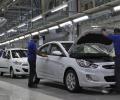
The country's leading automakers Maruti Suzuki and Hyundai Motor reported a decline in dispatches to dealers in March as shortage of electronic components impacted production. On the other hand, Tata Motors, Skoda and Kia India posted their highest ever monthly wholesales last month. Toyota Kirloskar Motor said its dispatches in March were the highest in the last five years while Mahindra & Mahindra also reported a robust increase in its passenger vehicle dispatches in March.

Passenger vehicle dispatches from companies to dealerships witnessed an increase of 1.6 pc year-on-year in January at 399,386 units driven by robust demand for utility vehicles, industry body SIAM said on Thursday. It was the highest-ever passenger vehicle dispatch for the month of January.

Removal of mark-ups to be paid by Maruti, other changes could raise funding need to Rs 6,000 crore.
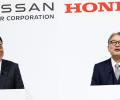
Two Japanese auto giants, Honda and Nissan, are moving towards a potential merger, but it remains unclear how their Indian operations will be immediately impacted.

MD Shinzo Nakanishi also rules out entering ultra low-cost car segment.

The list includes compact SUV, mini SUV, premium hatchback and premium MPV.
Suzuki has prioritised meeting with Gujarat Chief minister Narendra Modi over his Haryana counterpart B S Hooda, illustrating not only his fondness for Modi, whom he hosted last month in Japan, but also indicating the company's seriousness to start work on the Gujarat project.

Recently, TPEM's first born electric concept, Avinya broke cover. The model promises a minimum range of 500 kilometres and advanced technology features, aimed at buyers in India and outside. TPEM, the newly formed entity may also consider a separate dedicated sales channel for the EVs with a distinctive corporate identity once the volumes reach a critical mass and throughput is large enough for the dealers to be profitable, said Chandra. Elaborating further on the hiring strategy he said, "We will hire from everywhere-wherever the talent of the required competency is available."

Toyota, General Motors, Volkswagen, Ford, Honda, Renault, Hyundai, Suzuki and Nissan are among those who boast of production of a million unit or more every year.

Auto majors report positive sales figs for November.
Japanese manufacturer Suzuki displayed two cars at the Frankfurt Motor Show that have a huge potential for launch in India.

Includes all-new versions of Swift and Swift Dzire.

The first luxury car will be launched in the first quarter of 2025 and the company is planning to open 12 'MG Select' showrooms in the next six months.

After a strong opening, shares of the car-maker further zoomed 9.37 per cent to Rs 1,899.90 -- its 52-week high on the BSE.

Maruti Suzuki is set to launch a new multi-purpose vehicle (MPV) -- Invicto -- next month. It will be the company's first passenger vehicle with an ex-showroom price tag of Rs 20 lakh or more, said Shashank Srivastava, executive director (sales), on Tuesday. The upcoming MPV will compete with the likes of Toyota Innova Hycross, Kia Carnival, Hyundai Alcazar, MG Hector Plus, Tata Safari, Mahindra & Mahindra XUV700, and Mahindra & Mahindra Scorpio-N - all having three rows of seats. Invicto will be based on the Hycross by Toyota, which will manufacture Maruti's most expensive car at its Bidadi plant in Karnataka.

'The customer is fast changing, and she demands newer experiences that wealth can buy.'

Traversing from being just vehicle manufacturers to mobility solutions providers amid a raging debate over which eco-friendly technology must be incentivised, the Indian automobile industry is driving in the new year under the shadow of a slowdown in sales with the post-pandemic pent-up demand in distant memory. The shift in the auto industry -- where advanced technologies like autonomous driving, vehicle intelligence, connected features and electrification are quickly gaining traction -- will be reflected in the upcoming Bharat Mobility Global Expo in which India's flagship Auto Expo has been clubbed to be held from January 17-22, 2025 in Delhi-NCR.

The stock of the country's largest passenger vehicle maker, Maruti Suzuki India (MSIL), has been hitting successive all-time highs over the past three trading sessions. The rally in the scrip has helped it notch over a 21 per cent gain since the start of February, outperforming the National Stock Exchange Nifty Auto Index. The gains for the leader of small passenger cars have been more recent, as the company still trails the Nifty Auto over one- and two-year periods.

The impressive riding dynamics of the Gixxer now get a sporty full fairing that makes this 155cc offering from Suzuki a lot more desirable, says Indian motoring website MotorBeam.
MNC auto firms that sold cars below cost, at a loss, thereby paying lower excise duty are prime targets.

General Motors India on Tuesday increased vehicle prices by up to Rs 61,000 in order to partially offset the impact of rising input costs and expiry of reduced excise duty concessions.

Volkswagen last year acquired 20 per cent stake in Maruti Suzuki India's parent Suzuki Motor Corp for about $2.5 billion (over Rs 11,500 crore).

Risks emerging from the US have left automotive investors worried. US President Donald Trump has announced 25 per cent tariffs on automotive imports, while global electric carmaker Tesla has taken its first steps towards entering India. While these developments are sentimentally negative for related stocks, it may be too early to conclude the eventual impact, analysts said.
The company has the largest car park in EVs in India, estimated to be around 170,000 units. As a pilot, it has already started work with used online car marketplace Spinny.

...But sales of domestic passenger vehicles dropped 2% to 3% year-on-year in August owing to low demand.

The amount would depend on the time period that would elapse from the start to when capacity reaches 1.5 million cars

Media report says unfavourable excise structure, large investments are the main reasons
Leading automakers Maruti Suzuki, Hyundai and Tata Motors on Friday reported robust sales for February as demand for sports utility vehicles continued to remain strong. Mahindra & Mahindra, Toyota Kirloskar Motor and Honda Cars also witnessed higher vehicle dispatches to dealers last month. February turned out to be the third-best month for sales for the industry ever.

Tata Motors, India's third largest passenger vehicle maker, took pole position in the competitive sport utility vehicle (SUV) market in October, reveals the data from industry sources. Riding high on the Punch - the sub-compact SUV offering launched on October 18 - the Tata group flagship sold a record 23,381 units in October, higher than 20,022 units sold by archrival Mahindra & Mahindra, 18,538 units sold by Hyundai Motor India, and 15,931 units sold by Kia Motors India. Utility vehicles - that include SUVs and multipurpose vehicles - accounted for almost one in every two passenger vehicles sold in India in the first seven months of the current financial year, according to the Society of Indian Automobile Manufacturers.

The Tata group flagship has sold more sport utility vehicles (SUVs) in the domestic PV market in the past four months than any other automotive manufacturer, cementing its no.1 spot. It first grabbed pole position in the SUV segment in October 2021 after the launch of the Punch - a sub-compact SUV offering.
